
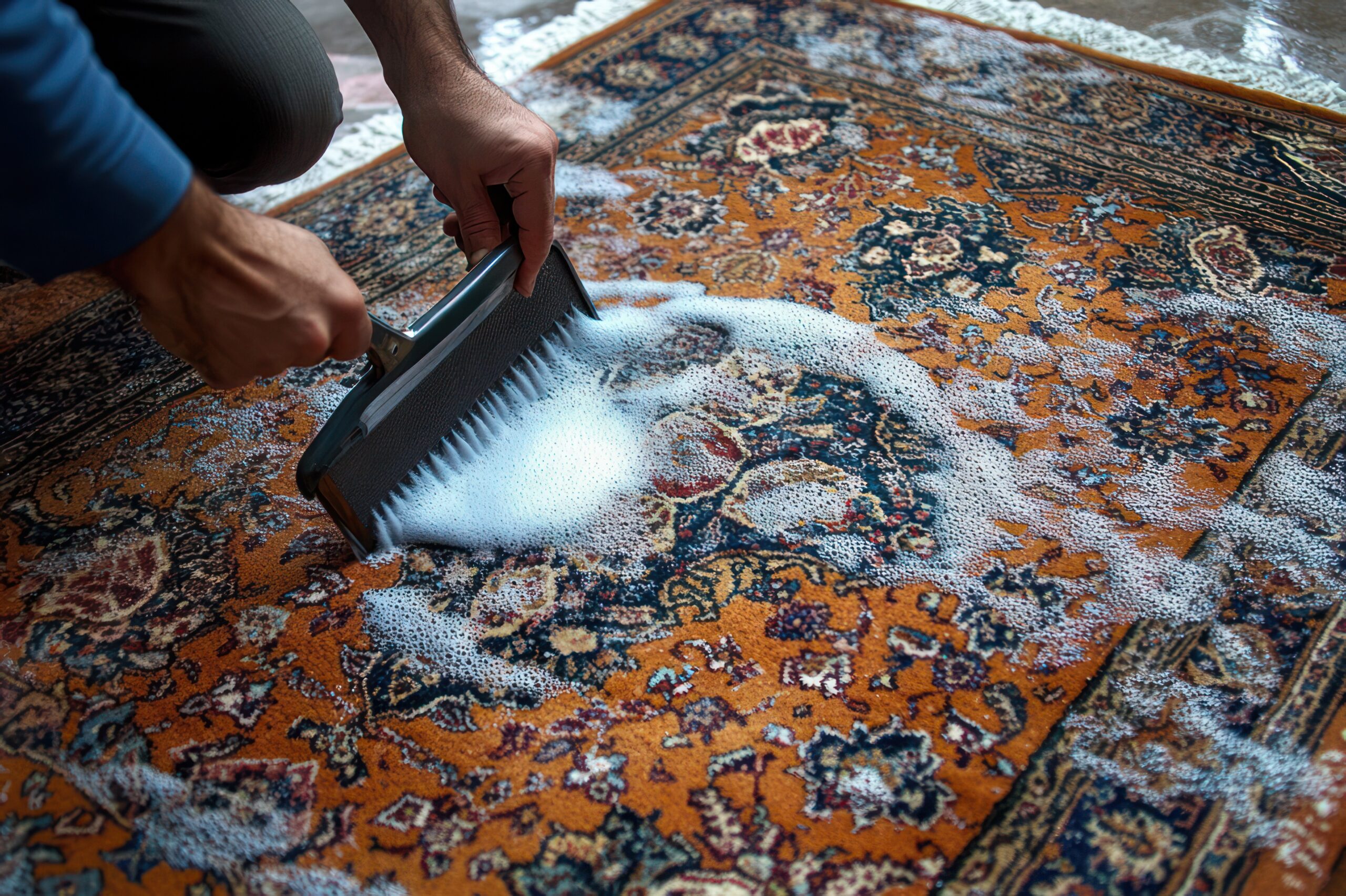
An Oriental rug can be a beautiful centerpiece in your home, but everyday life can eventually leave its mark. From spilled drinks and food to muddy footprints and pet accidents, stains are one of the most common reasons homeowners seek professional Oriental rug cleaning.
The good news is that many stains can be treated successfully when they’re addressed properly and promptly. However, Oriental rugs require more care than many standard household rugs. Their natural fibers, intricate construction, and dyes can be sensitive to the wrong cleaning products or techniques.
So, what’s the best way to remove a stain from an Oriental rug? Here’s what you should know before reaching for a bottle of household cleaner.
Act Quickly When a Spill Happens
When something spills on your Oriental rug, don’t wait for it to dry. The longer a substance sits in the fibers, the more difficult it may be to remove.
Start by gently blotting the affected area with a clean, absorbent cloth. Work from the outside of the stain toward the center to help prevent it from spreading.
Avoid scrubbing. Scrubbing can push the stain deeper into the rug, damage delicate fibers, or cause the affected area to look different from the surrounding rug.
The goal at this stage isn’t necessarily to completely remove the stain. It’s to absorb as much of the spilled substance as possible before it has a chance to penetrate deeper into the rug.
Avoid Harsh Household Cleaning Products
One of the biggest mistakes homeowners make when cleaning an Oriental rug is reaching for whatever carpet or household cleaner they already have on hand.
Oriental rugs can contain natural fibers and dyes that react differently to cleaning solutions. Some products may cause discoloration, fading, or dye bleeding. Others can leave behind a residue that attracts more dirt.
For this reason, it’s best to avoid bleach, strong detergents, stain removers, and other harsh chemicals unless you know they are safe for your specific rug.
Even products marketed as being safe for carpets aren’t necessarily appropriate for an Oriental rug.
Different Stains Require Different Approaches
Not all rug stains are the same. A water-based spill, greasy food stain, and pet accident can each require a different treatment approach.
Food and Drink Stains
Coffee, juice, soda, wine, and other beverages can quickly soak into rug fibers. Blot the spill with a clean cloth as soon as possible, being careful not to rub the area.
Food spills should also be gently removed rather than scrubbed into the fibers. Once you’ve removed as much of the substance as possible, professional cleaning may be needed to completely treat the affected area.
Pet Stains and Odors
Pet accidents can be particularly challenging because urine and other substances can penetrate beyond the visible surface of the rug. Even if the stain appears to disappear, odors can remain.
If your pet has an accident on an Oriental rug, blot the area immediately and avoid saturating the rug with cleaning products or water. Professional cleaning can help address both the visible stain and the underlying contamination.
Mud and Dirt
For mud, allow the area to dry before attempting to remove it. Once dry, gently remove loose dirt rather than rubbing it into the fibers.
Regular professional rug cleaning can also help remove the dirt and debris that become embedded in an Oriental rug over time.
Be Careful With DIY Stain Removal
There are plenty of DIY rug-cleaning tips online, but that doesn’t mean every method is safe for an Oriental rug.
The biggest concern is that you may not know exactly how your rug will react to water, cleaning solutions, or agitation. Natural dyes can bleed, delicate fibers can become damaged, and excessive moisture can create additional problems.
Before attempting to treat a significant stain yourself, consider the rug’s age, material, construction, and value. A valuable or antique Oriental rug may be better left to a professional with experience handling these types of textiles.
Can You Remove Old Stains From an Oriental Rug?
Old stains can be more challenging than fresh spills, but that doesn’t necessarily mean they’re permanent.
Over time, stains can become embedded in the rug fibers or affected by previous cleaning attempts. A professional rug cleaner can evaluate the stain and determine the safest treatment method based on the rug’s materials and construction.
It’s important to have realistic expectations. Some stains may respond extremely well to professional treatment, while others may leave behind some discoloration or permanent damage.
What About Color Bleeding?
Color bleeding is one of the biggest concerns when cleaning Oriental rugs. If the rug’s dyes aren’t colorfast, moisture or certain cleaning products can cause colors to migrate into neighboring areas.
This is one reason professional Oriental rug washing typically begins with an inspection. A trained cleaner can evaluate the rug and identify potential risks before deciding how it should be cleaned.
Trying to aggressively remove a stain without considering the dyes and fibers could ultimately create a larger problem than the original stain.
When Should You Call a Professional?
A small, fresh spill may be something you can carefully blot at home. However, professional help is a smart option when you’re dealing with:
- Large or deeply embedded stains
- Pet urine or persistent odors
- Red wine or other difficult-to-remove liquids
- Grease and oil
- Dye transfer or color bleeding
- Antique or valuable Oriental rugs
- Delicate silk or wool rugs
- Rugs that have already been damaged by DIY cleaning
- Stains that continue to return after cleaning
Professional Oriental rug washing is designed to clean the entire rug safely rather than simply treating the visible spot. This can help prevent noticeable differences between a cleaned area and the rest of the rug.
Professional Oriental Rug Cleaning Can Do More Than Remove Stains
Stain removal is only one part of caring for an Oriental rug. Dirt, dust, pet hair, allergens, and other debris can accumulate deep within the rug over time.
Routine professional cleaning can help keep your rug looking its best while addressing the buildup that regular vacuuming may not remove.
If your rug has additional damage such as worn edges, damaged fringe, or holes, cleaning may also reveal areas that need attention. In these cases, professional rug repair can help restore the rug and extend its useful life.
Protect Your Oriental Rug From Future Stains
While accidents are inevitable, a few simple habits can help protect your rug.
Vacuum regularly using an appropriate setting, address spills quickly, and avoid placing heavy furniture directly on delicate areas whenever possible. You can also rotate your rug periodically to help distribute everyday wear.
Most importantly, don’t wait until your Oriental rug looks extremely dirty before having it professionally cleaned. Regular maintenance can make it easier to keep the rug looking beautiful for years to come.
Trust the Professionals With Your Oriental Rug
When an Oriental rug becomes stained, your first instinct may be to grab a cleaning product and start scrubbing. But with delicate rugs, the wrong approach can cause fading, bleeding, or permanent fiber damage.
Blot fresh spills, avoid harsh chemicals and aggressive scrubbing, and consider professional treatment for difficult or significant stains. With the right care, your Oriental rug can continue to be a beautiful part of your home for many years.
If your Oriental rug needs professional cleaning, stain removal, or specialized care, contact the Oriental Rug Washing Company to learn more about the right cleaning approach for your rug.
