
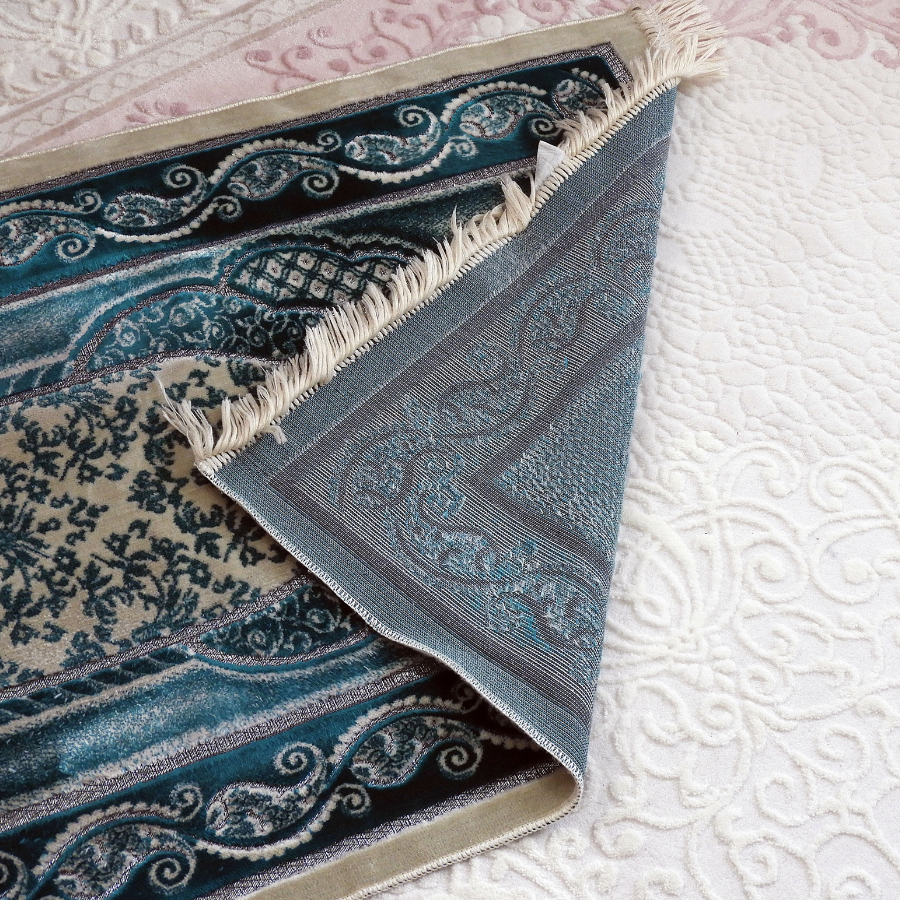
Fringe is usually the first part of a rug to look bad and the last part people think about. It gets vacuumed against the grain, walked on at the doorway, chewed by a puppy, and slowly worn down until one morning you look at the end of your rug and see a row of stubby, tangled, uneven threads where a clean fringe used to be.
The good news is that most fringe damage is repairable, and it is one of the more affordable repairs we do. The harder truth is that fringe damage is also a warning light. Wait long enough and the problem stops being a fringe problem and becomes a foundation problem, which is a much bigger job.
Here is how to tell which one you are dealing with.
Fringe Is Not Decoration, It Is the End of Your Rug
On a hand woven rug, the fringe is not sewn on. It is the warp, the vertical foundation threads that the whole rug is knotted onto. Those threads run the entire length of the rug and simply stick out past the woven area at each end. What you see as fringe is the exposed tail of the rug’s own skeleton.
That is why fringe wear matters so much more than it looks like it should. When fringe frays back to the edge of the pile, the knots at the end of the rug lose the thing holding them in place. Rows start letting go. The rug begins shedding itself from the ends inward, and every month you wait, a little more of the woven design goes with it.
Machine made rugs work differently. Their fringe is usually a separate strip sewn or glued onto the end, which changes the repair options considerably. We will come back to that.
What Can Almost Always Be Saved
Frayed, fuzzy, or shortened fringe. If your fringe has gone soft and matted but the woven part of the rug is still intact, you are in good shape. This is the most straightforward repair.
Missing chunks. Fringe often disappears in patches rather than evenly, especially near a doorway or a chair leg. Entire sections can be rebuilt and blended in so the end reads as one continuous line again.
Uneven ends. One side longer than the other, or a fringe that has been trimmed at some point by someone in a hurry. Evening this out and re-finishing both ends restores the symmetry that makes a rug look cared for.
Loose knots and unraveling. If the small securing knots at the base of the fringe have come untied and threads are starting to pull free, that is an easy fix caught at this stage. It is a much harder fix six months later.
Pet damage at the ends. Chewing and clawing looks alarming and is usually still workable, as long as the moisture from an accident has not gotten into the foundation.
When the Repair Goes Beyond the Fringe
This is the part worth understanding before you get an estimate. In every case below, the rug is still fixable. What is gone is the original fringe, which means the repair is a rebuild or a replacement rather than a touch up, and the cost reflects that.
Fringe that has worn back into the pile. Once the warp threads are gone past the edge of the woven area, there is no fringe left to repair. The end of the rug itself has to be rebuilt, with new warp secured into the foundation before any finishing happens. This is real restoration work, it takes an artisan and time, and it costs meaningfully more than a fringe repair. It is still worth doing on a good rug, but it is a different conversation.
Rotted fringe. Cotton warp that has sat in moisture, taken repeated pet accidents, or been stored damp does not come back. It will feel brittle and break between your fingers with almost no effort. The rotted portion has to be removed and the end finished a different way.
Fringe that has already been cut off flush. Some previous owners, and unfortunately some previous cleaners, solve a shaggy fringe by trimming it to nothing. Once the warp is cut at the edge of the pile, the original fringe is gone permanently. We can still protect and finish that end, and it can look intentional and clean, but the rug will not have fringe again unless one is added.
Glued fringe on machine made rugs. When a factory applied fringe with adhesive, the glue line itself is often the failure point. Reattaching it rarely holds. Replacement is usually the only sensible route, and on an inexpensive rug it is worth asking whether the repair is worth more than the rug.
Sun rotted ends. A rug that has spent years with one end in direct window light can have fringe that looks fine and shatters when handled. Same answer as moisture rot.
The Repair Options, In Plain Terms
Securing the ends. The threads at the base of the fringe are re-knotted or over-stitched so nothing more can unravel. This is the minimum, and on a rug with early wear it is often all that is needed. Think of it as stopping the bleeding.
Fringe replacement. New fringe is matched to the original in weight, color, and length, then hand sewn to the end of the rug. Done properly, with the right materials and an even hand, you will not pick it out from across the room.
End finishing without fringe. For rugs where the fringe cannot be restored, the end can be secured with a woven or stitched finish that stops all further loss. Plenty of beautiful rugs live happily this way, and on rugs that never had much fringe to begin with it looks completely at home.
End rebuilding. The full restoration for rugs that have lost woven rows. New foundation threads are worked back into the rug, the missing knots are replaced, and the end is finished. This is the work our rug repair artisans handle with matched wool and dye so the repair blends into the existing texture and design.
A Quick Check You Can Do Right Now
Kneel down at the end of your rug and look at the last inch of the woven area, not the fringe itself.
If the pile runs right up to a clean line and the fringe sticks out past it, you have a fringe repair. If you can see a row or two of loose, unsupported knots at the very edge, or a small gap where woven design used to be, you have crossed into foundation work. Roll a few fringe threads between your fingers. If they crumble instead of bending, that is rot.
Either way, take a photo and bring the rug in. We do the evaluation and the estimate in person because fringe damage looks very different at eye level than it does under a bright light on a work table.
Keeping the New Fringe From Going the Same Way
Repair only holds if the cause goes away with it.
Use a suction only vacuum on hand woven rugs, and keep beater bars and rotating brushes off the fringe entirely. That single habit destroys more fringe in Utah homes than foot traffic does. A custom cut rug pad keeps the rug from creeping and dragging its ends across the floor. Rotate the rug every three to six months so the same end is not always taking the doorway traffic. And keep the ends out of standing moisture, including plant saucers and pet water bowls.
Regular cleaning helps more than people expect. Grit trapped at the base of the fringe acts like sandpaper every time someone walks over it.
Bring It In Before the Ends Go
We have been repairing and washing rugs in Provo since 1999, and the pattern almost never changes. The people who come in when the fringe first looks rough leave with a modest repair. The people who wait come in with a restoration.
If your fringe is fraying, thinning, or already missing in spots, contact us for a free quote or call the Provo shop at (801) 375-4348. Bring the rug and we will tell you honestly what can be saved, what cannot, and whether the repair is worth the investment on your particular rug.
